
Choosing the right auto repair shop matters. Learn what to look for, including certifications, transparent pricing, modern diagnostics, and trusted customer reviews.
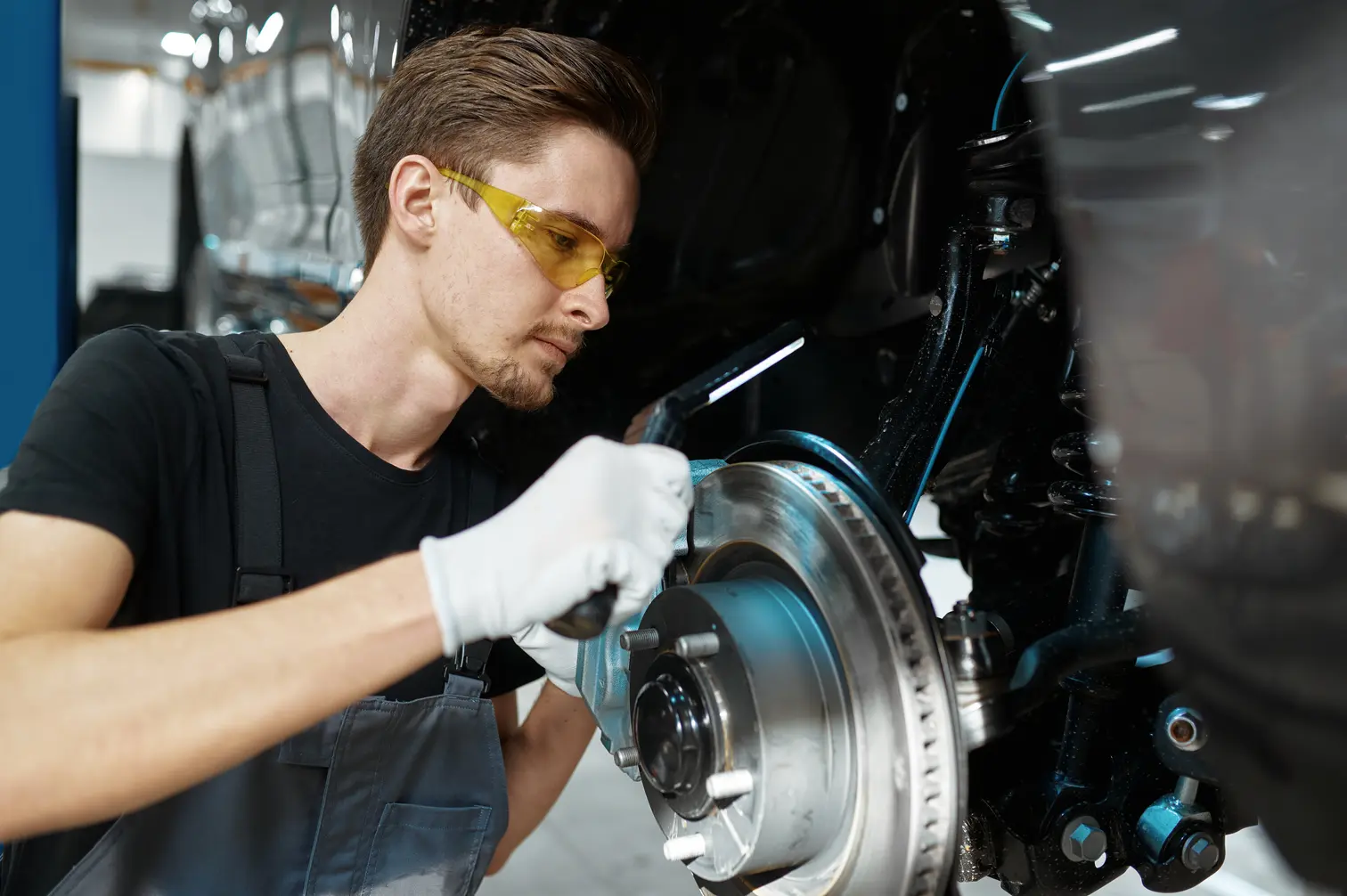
What Happens During a Brake Inspection? Here’s What a Mechanic Is Actually Looking For
Most drivers have been told their brakes need attention without fully understanding what the technician actually looked at to reach that conclusion. A brake inspection is not a glance and a guess. When it is done properly, it is a systematic, measurement-based evaluation of every component in the braking system — and the findings should be documented, explainable, and visible to you as the vehicle owner. We at Tower Service Station perform a full digital inspection on every vehicle using our Auto-Vitals system, and brake assessment is one of the most critical parts of that process. Here is exactly what a thorough inspection covers, and why each step matters.
Why Inspection Comes Before Everything Else
No honest brake repair recommendation can be made without first inspecting the system in full. The symptom a driver reports — a squeal, a vibration, a soft pedal — narrows the field but does not confirm a diagnosis.
A pulling sensation when braking, for example, could point to a seized caliper on one side, uneven pad wear, a stuck slide pin, or a rotor with significantly more runout on one axle than the other. Each of those causes has a different fix and a different cost. Recommending a pad replacement without identifying the underlying cause means the new pads wear unevenly from day one and the problem returns quickly.
The inspection is not a formality before the real work begins. It is the real work.
What a Technician Is Physically Checking at Each Corner
A complete brake inspection at each wheel position involves more checkpoints than most drivers realize:
- Brake pad thickness — measured with a gauge, not estimated visually; minimum safe thickness is typically 2–3mm depending on manufacturer specification, and both the inner and outer pad on each caliper are checked separately since they can wear unevenly
- Rotor thickness — measured with a micrometer at multiple points around the rotor face; a rotor below minimum discard thickness cannot be safely resurfaced and must be replaced regardless of surface appearance
- Rotor surface condition — scoring, grooving, heat cracks, and rust lip buildup are all assessed; deep grooves accelerate new pad wear and reduce initial braking bite
- Rotor runout — a dial indicator measures lateral wobble in the rotor as it turns; excessive runout causes the pulsing or pedal vibration that drivers often notice at highway speeds during light braking
- Caliper condition and movement — the caliper body is checked for fluid leaks at the piston seal, and the slide pins are checked for corrosion and free movement; seized slides cause the caliper to apply force unevenly, dragging one pad against the rotor constantly
- Brake hardware — shims, clips, and anti-rattle hardware are checked for wear and corrosion; worn hardware contributes to noise and allows pads to shift position slightly under load
Measuring What You Cannot See From the Outside
Some of the most important findings in a brake inspection are invisible to the driver and only revealed through measurement tools.
Rotor thickness variance — the difference in thickness measured at different points around the same rotor — is one example. A rotor that has thinned unevenly due to heat cycling will cause a rhythmic pulsing under braking even if the surface looks reasonable to the eye. This is only caught with a micrometer.
Brake fluid condition is another. Brake fluid is hygroscopic, meaning it absorbs moisture from the atmosphere over time. As moisture content rises, the fluid’s boiling point drops. In a system that generates significant heat — particularly on a heavily loaded vehicle or during sustained downhill braking — degraded fluid can boil, creating compressible gas bubbles in the hydraulic lines and causing a sudden, dramatic loss of pedal firmness.
Fluid condition is tested with a moisture meter or test strips, not visually. Fluid that looks fine can already be compromised.
Checking the System Beyond the Pads and Rotors
A brake inspection that stops at pads and rotors is incomplete. The full hydraulic and mechanical system deserves attention at every service interval:
- Brake lines and hoses — rubber brake hoses are checked for cracking, swelling, or deterioration; a hose that is collapsing internally can act as a one-way valve, trapping pressure at the caliper and causing brake drag
- Master cylinder — the fluid reservoir is checked for level and condition; a low level without a known cause (recently replaced pads) suggests a leak somewhere in the system
- ABS components — wheel speed sensors are inspected for damage and correct positioning; a sensor sitting too far from the tone ring due to a knocked bracket will trigger ABS faults under normal driving
- Parking brake function — cable tension and engagement are verified, particularly on rear drum systems where adjustment affects both parking and service brake performance
- Brake pedal feel — with the engine running, pedal travel, firmness, and any pulsation under steady pressure are assessed as a final functional check across the whole system
What a Digital Inspection Report Changes
The documentation of a brake inspection is not bureaucratic overhead. It is the difference between a driver making an informed decision and taking someone’s word for it.
A properly documented inspection records actual measurements — pad thickness in millimetres, rotor thickness at multiple points, fluid condition score — alongside photos of worn components and technician notes. When findings are presented this way, the recommendation becomes self-evident rather than a matter of trust.
It also creates an accurate baseline for future visits. Knowing that your rotors measured 24.2mm at the last inspection and are now at 22.6mm tells you something specific about wear rate and remaining service life. Knowing only that they “looked okay” last time tells you nothing.
The Inspection Is Your Starting Point — Not the Invoice
A brake inspection is not a commitment to repair. It is information, and you are entitled to have all of it before deciding anything.
A thorough inspection gives you pad measurements, rotor measurements, caliper condition, fluid status, hardware condition, and a clear explanation of what is urgent, what is approaching end of life, and what is genuinely fine for now. That picture may be simpler or more complex than the symptom that brought you in suggested.
We at Tower Service Station document every brake inspection through our Auto-Vitals digital system, so every measurement, every finding, and every photograph is in your hands before a single part is ordered. We install XTremeStop brake pads and rotors — Canadian-engineered to original equipment specifications — when replacement is what the inspection actually calls for. If it does not, we will tell you that too.
Book your inspection at 905-574-6166 or through our website. Know exactly what your brakes look like before someone tells you what they need.

Related Posts

This Post Has 0 Comments