
What should you do when your check engine light comes on? Learn the first steps to take, what to check, and when to seek professional help.
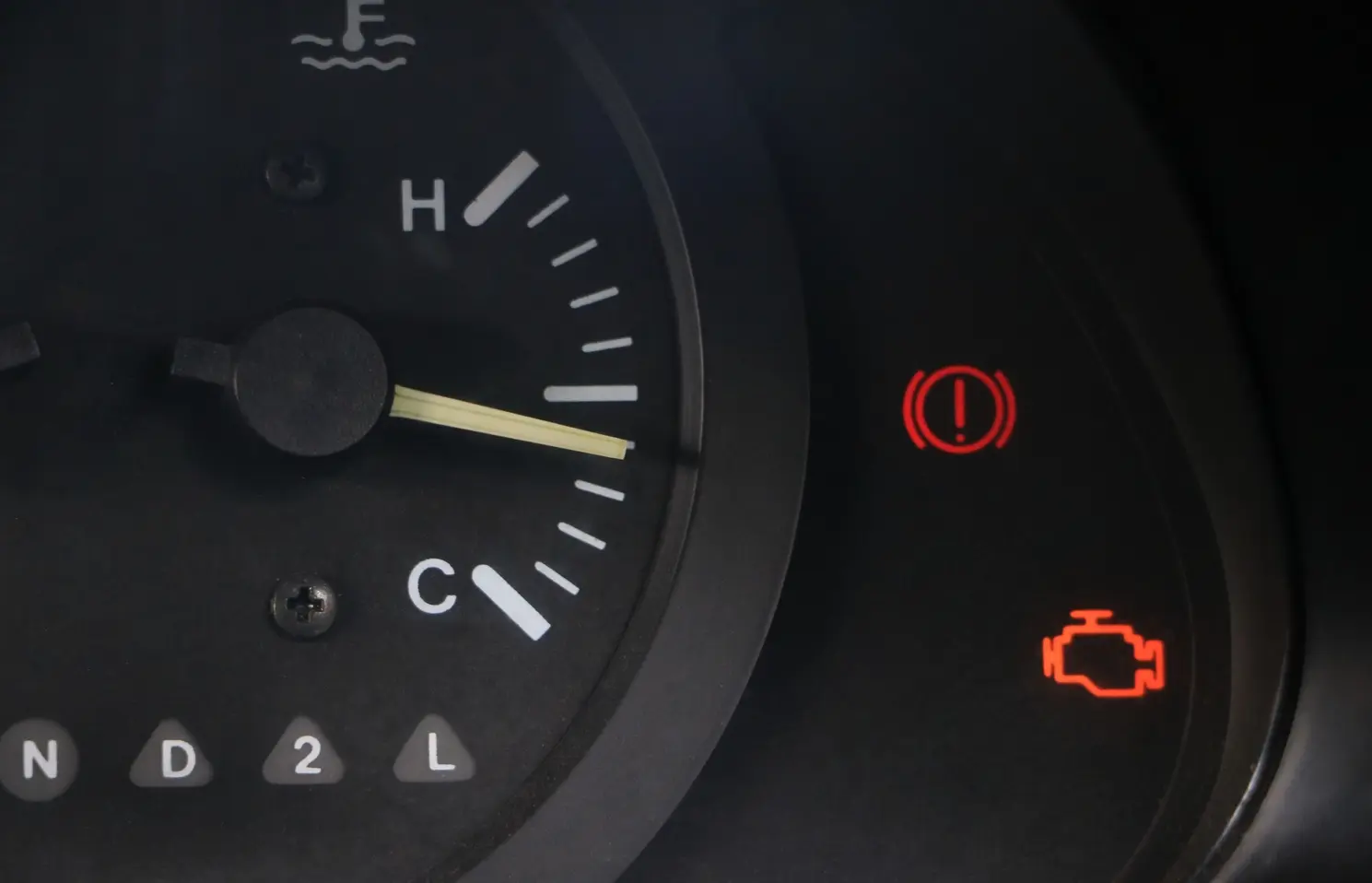
Flashing vs. Solid Check Engine Light — Here’s Why That Difference Really Matters
That small amber glow on your dashboard might be easy to ignore during a long commute, but the check engine light is one of the most misunderstood signals in your vehicle. Not all check engine lights are created equal — and the difference between a solid one and a flashing one can mean the difference between a minor fix and a serious repair bill. At Tower Service Station, we see drivers react to both extremes: full panic over a steady light, and dangerous indifference to a flashing one. So let’s clear the air.
What the Check Engine Light Is Actually Telling You
The check engine light, formally called the Malfunction Indicator Lamp (MIL), is part of your vehicle’s On-Board Diagnostics system — OBD-II in most vehicles made after 1996. When something falls outside the expected parameters monitored by your vehicle’s Engine Control Module (ECM), it triggers a fault code and lights up that icon.
The key thing to understand: the light itself is not a diagnosis. It’s a notification. A technician needs to connect a diagnostic scanner to your vehicle’s OBD-II port to retrieve the stored fault codes and interpret what your vehicle’s systems are actually reporting.
The Solid Light: Steady but Not Silent
A steady, non-flashing check engine light means a fault has been detected and logged, but the vehicle is not in an immediate crisis state. This could be any number of things — a loose gas cap, a failing oxygen sensor, a worn spark plug, or an emissions-related fault.
Common causes of a solid check engine light include:
- Loose or damaged fuel cap — one of the most frequent and easily resolved triggers
- Failing oxygen sensor — affects fuel efficiency and emissions readings
- Catalytic converter issues — often caught through downstream O2 sensor data
- Mass airflow sensor fault — impacts fuel mixture calculations
- Evaporative emissions (EVAP) leak — usually a small vapor leak in the fuel system
A solid light is not a reason to pull over immediately, but it is a reason to book a diagnostic appointment soon. Ignoring it long-term can allow a manageable issue to snowball into something far more costly.
The Flashing Light: This One Cannot Wait
A flashing or blinking check engine light is a different story entirely. This indicates an active, ongoing misfire — meaning fuel is entering a cylinder but not combusting properly. When this happens, raw unburned fuel passes into the exhaust stream and can cause rapid, severe damage to the catalytic converter.
A catalytic converter is one of the more expensive components to replace in a vehicle’s exhaust and emissions system. What starts as a misfire — potentially caused by a bad ignition coil, a failing spark plug, or a fuel injector issue — can destroy a catalytic converter within miles of continued driving.
If your check engine light is flashing, the right move is to reduce speed, avoid heavy acceleration, and get your vehicle to a shop as soon as possible. Do not continue driving normally.
Why a Code Reader at a Parts Store Isn’t Enough
It’s tempting to stop at a parts store, have them scan the code for free, and assume that the code number tells you what’s wrong. It doesn’t — not fully. Fault codes point to a system or circuit that’s out of range. They don’t tell a technician which component failed or why.
Common causes of a solid check engine light include:
- P0420 — often assumed to be a catalytic converter, but can be triggered by a faulty rear oxygen sensor
- P0300 series — misfire codes that need further diagnosis to pinpoint the cylinder and root cause
- P0171/P0174 — lean fuel mixture codes that could stem from a vacuum leak, a dirty MAF sensor, or a fuel delivery problem
Modern vehicles can store multiple fault codes at once, including pending codes that haven’t yet triggered the light — all of which provide important diagnostic context that a single code read can miss.
Professional diagnostic equipment reads live sensor data, freeze-frame data, and pending codes — giving technicians the full picture. That’s a significant step beyond a code number on a receipt.
How Vehicle Age and Type Factor In
Older vehicles and newer ones behave differently when it comes to fault detection. A vehicle from the early 2000s has fewer sensors and a less complex ECM, which means the check engine light is triggered by a narrower range of faults. A modern vehicle — particularly a hybrid — monitors battery health, regenerative braking systems, electric motor parameters, and high-voltage components alongside all the traditional engine systems.
For hybrid vehicles, a check engine light can involve the powertrain control module, the hybrid battery management system, or the inverter cooling circuit — systems that require specialized diagnostic tools and training to interpret accurately.
The complexity of today’s vehicles is precisely why ongoing investment in diagnostic technology and technician training matters so much. A vehicle from 1996 and one from 2022 both have a check engine light, but what’s behind it is a completely different conversation.
Don’t Wait Until It Gets Worse — Get It Read
The check engine light is not your enemy. It is your vehicle communicating with you. A solid light is a scheduled conversation. A flashing light is an urgent one. In both cases, the worst thing a driver can do is ignore it.
Modern diagnostic equipment reads fault codes within seconds, and a trained technician can use that data alongside live sensor readings to give you an accurate picture of what’s actually happening — not just what the code number suggests. The sooner a problem is identified, the more repair options remain on the table, and the less likely a manageable fault becomes a major one.
We’ve been diagnosing and repairing vehicles on Hamilton Mountain for over 60 years — for every make, every model, and every warning light in between. Whether your check engine light just came on or it’s been glowing for a week, give us a call at 905-574-6166. We’ll get your vehicle in, run a proper diagnostic, and walk you through exactly what your car is telling you — no guesswork, no pressure, just straight answers.

Related Posts


This Post Has 0 Comments