
Before approving any car repair, ask the right questions. Learn what to ask about pricing, parts, urgency, and diagnostics to avoid unnecessary costs.
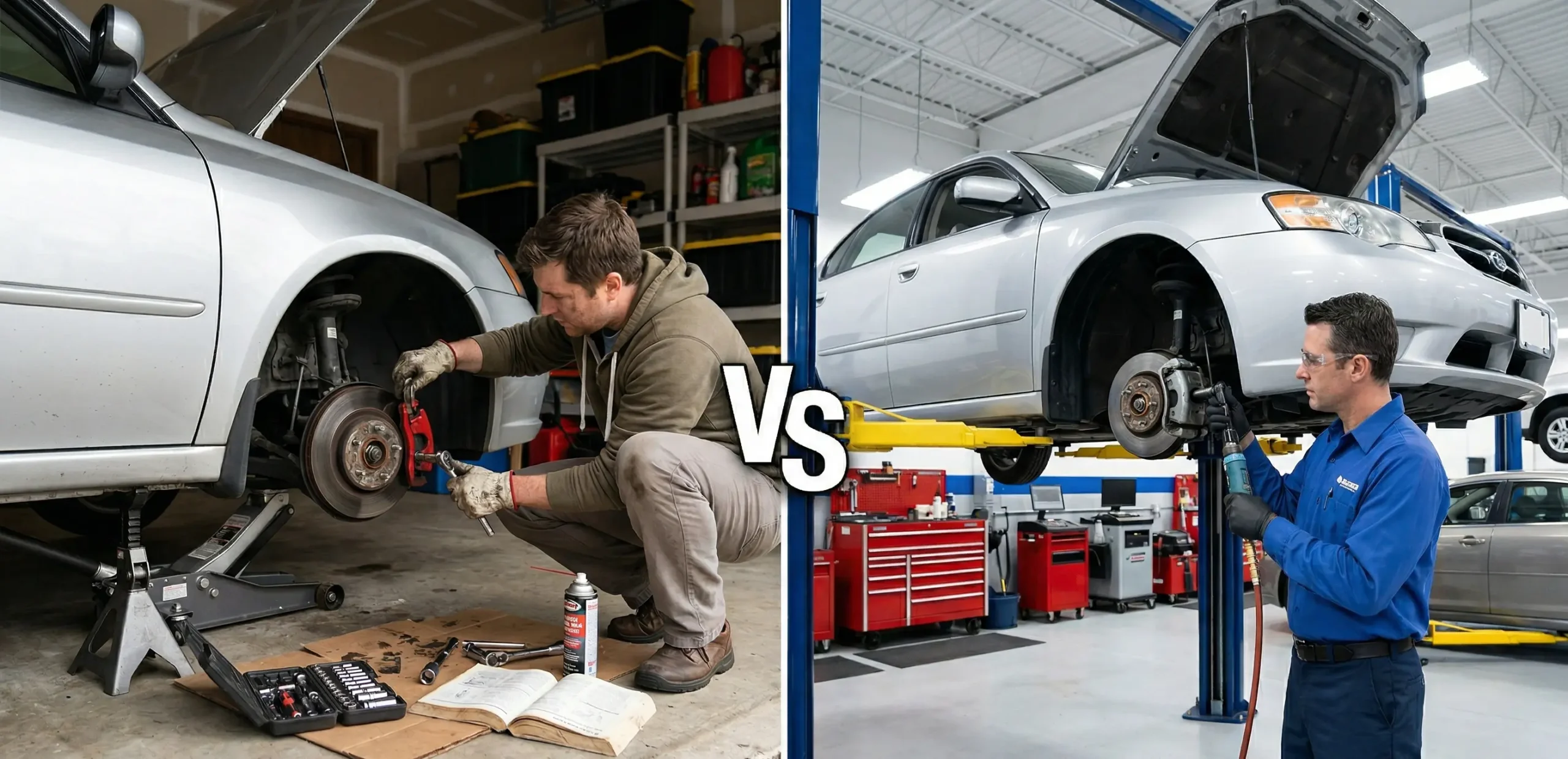
DIY Brake Repair vs. Taking It to a Shop: What’s Actually Worth Your Time
There is no shortage of brake repair tutorials online. With the right tools, a weekend afternoon, and a reasonable level of mechanical confidence, a basic pad replacement is something many home mechanics do successfully. But brakes are also the most safety-critical system on your vehicle, and there is a significant difference between a job that looks finished and one that is finished correctly. We at Tower Service Station work with drivers at every end of this spectrum — those who have attempted a repair and want it verified, and those who have never opened a hood and want straightforward, honest guidance. Here is how to think through the decision properly.
The Case for DIY: When It Actually Makes Sense
Home brake work is not inherently irresponsible. For the right person, on the right vehicle, doing the right job, it can be a reasonable choice.
A basic front pad replacement on a straightforward disc brake system — no electronic parking brake actuator, no integrated brake-by-wire system, no rear drum — is among the more accessible jobs in home mechanics. The tools required are manageable, the process is well-documented, and the component itself is visible and measurable.
If you have prior mechanical experience, access to a proper hydraulic floor jack and jack stands (never just a scissor jack), a torque wrench, a brake piston tool, and the time to do the job without rushing, a pad replacement on a simple vehicle is within reach.
The operative phrase is: on a simple vehicle. Modern cars and trucks increasingly complicate what used to be a clean procedure.
Where DIY Brake Work Goes Wrong
The gap between a confident start and a safe finish is where most DIY brake problems live. Common points of failure include:
- Incorrect caliper piston compression — on vehicles with electronic parking brakes, the rear caliper piston must be rotated while being compressed, not simply pushed back; forcing it damages the caliper and often requires replacement
- Improper torque on caliper bolts — under-torqued bolts can loosen under heat and vibration; over-torqued bolts can crack caliper brackets or strip threads; both outcomes affect stopping reliability
- Skipping rotor measurement — replacing pads on a rotor below minimum thickness or with significant scoring creates a system that wears unevenly and performs poorly immediately
- Not lubricating caliper slides correctly — the wrong lubricant, or lubricant applied to friction surfaces, causes uneven pad wear, brake drag, and heat buildup over time
- Brake fluid contamination — opening the brake system without proper technique risks introducing moisture or debris; pushing fluid back into the master cylinder without checking its condition first can cause downstream issues
- Omitting the bed-in procedure — new pads require a controlled break-in sequence to transfer an even friction layer onto the rotor; skipping this reduces initial stopping performance
Each of these is a detail that tutorial videos often gloss over or assume the viewer already knows.
The Hidden Complexity of Modern Brake Systems
Brake systems have become substantially more sophisticated over the past decade, and that trend shows no sign of reversing.
Electronic stability control, ABS, electronic brake force distribution, hill-start assist, and integrated parking brake actuators all intersect with the brake system in ways that require scan tools to service correctly. On many newer vehicles, compressing a rear caliper piston without first using diagnostic software to put the system into service mode will trigger fault codes, disable safety features, or damage the actuator motor outright.
This is not a criticism of DIY mechanics. It is a factual description of what the job now involves on a large percentage of vehicles on the road. Knowing which category your vehicle falls into before starting is essential.
What a Shop Actually Does Differently
The value of professional brake service is not just labor. It is process, tooling, and accountability.
A properly equipped shop measures rotor thickness with a micrometer, checks runout, inspects caliper slide pins for corrosion and free movement, tests brake fluid for moisture content, and documents findings across both axles simultaneously. If a problem is found elsewhere — a leaking caliper seal, a compromised brake line, a worn ABS sensor — it is identified as part of the same inspection rather than discovered separately after the fact.
Knowing in advance what questions to ask at a brake service appointment, what measurements a technician should be recording, and what a completed inspection report should actually contain gives you a meaningful ability to assess the quality of the work being done on your vehicle.
The accountability piece matters too. A professional repair comes with a warranty on parts and labor. If a problem develops from the work, there is a clear path to resolution. A DIY repair has no such safety net.
The Cost Calculation Most People Get Wrong
DIY brake work looks cheaper on the surface. But the true cost comparison is more nuanced than parts versus labor.
Consider: a proper DIY brake job requires a hydraulic floor jack, jack stands, torque wrench, brake piston tool or electronic reset tool for rear calipers, brake cleaner, appropriate lubricants, and a way to properly dispose of brake fluid. If you do not already own these, the tool investment alone narrows the gap considerably.
Factor in the cost of a mistake — a damaged caliper, a stripped thread, a rotor that needs replacement because it was not measured before the pads went on — and the savings can evaporate entirely.
For drivers who already own the tools, do this kind of work regularly, and are working on vehicles without complex electronic integration, the economics can still favor DIY. For everyone else, the math is closer than it appears.
The Honest Bottom Line on Who Should Do What
DIY brake work has a legitimate place, but it belongs in a narrower set of circumstances than online confidence culture suggests. The vehicles that are genuinely straightforward to service at home represent a shrinking percentage of what is actually on the road.
For most drivers on most modern vehicles — and especially for anyone dealing with rear electronic parking brakes, towing applications, or a vehicle they depend on daily — professional service is the more reliable, and ultimately more economical, choice.
We at Tower Service Station approach every brake job with a full digital inspection through our Auto-Vitals system, so every axle, every component, and every measurement is documented and visible to you. We install XTremeStop brake pads and rotors — engineered and manufactured in Canada to original equipment specifications — because the quality of the part behind the work matters as much as the work itself.
If you are unsure whether a brake concern is something to tackle at home or hand off to a technician, call us at 905-574-6166 or reach out through our website. We will give you a straight answer.

Related Posts


This Post Has 0 Comments