
What should you do when your check engine light comes on? Learn the first steps to take, what to check, and when to seek professional help.
Signs Your Car Is Overdue for an Oil Change (And How to Catch It Early)
Your engine gives you warnings long before it gives up. Learn to read them.
Most drivers know they’re supposed to get an oil change. But between busy schedules and the “it’ll be fine for another week” mentality, it’s one of the easiest maintenance tasks to let slide. The problem is, your engine doesn’t share your schedule.
Here at Tower Service Station, we’ve been keeping Hamilton vehicles on the road for decades, and one thing we see consistently is how many avoidable engine issues trace right back to neglected oil changes. The good news? Your car will almost always warn you first. You just need to know what to listen and look for.
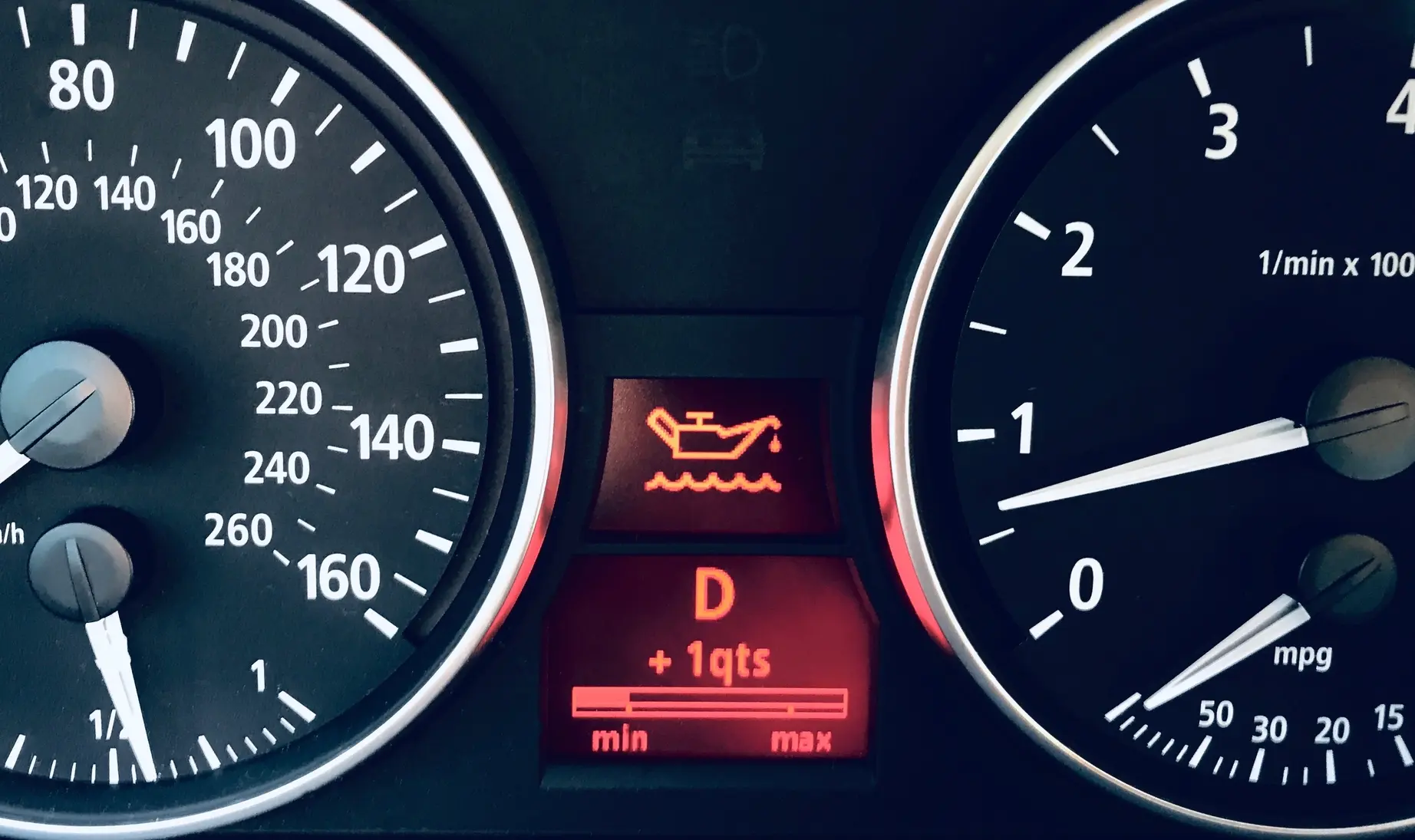
Your Dashboard Oil Light Comes On (And Stays On)
It sounds obvious, but you’d be surprised how many drivers see the oil pressure or oil life warning light flicker on and assume it’s a sensor glitch. In most modern vehicles, the oil life monitoring system doesn’t simply track mileage. It uses an algorithm that accounts for driving conditions, engine temperature, and load to give you a genuinely accurate picture of where your oil stands.
When that light comes on, it’s not a suggestion. Oil pressure warnings in particular indicate that oil isn’t circulating properly through the engine. Driving on low or degraded oil creates metal-on-metal friction that can cause lasting damage within minutes, not miles.
The distinction matters: an oil life light gives you a window to act. An oil pressure light means pull over and call your mechanic immediately.
The Oil Itself Is Telling You Something
One of the simplest diagnostic tools for your engine is a paper towel and thirty seconds of your time. Fresh motor oil is typically amber or light brown and has a smooth, slightly translucent consistency. As it ages and collects combustion byproducts, metal particles, and moisture, it degrades visually before it degrades mechanically.
Black, gritty oil
The oil has accumulated carbon deposits and particulates. It’s no longer effectively lubricating or cleaning engine components.
Milky or frothy oil
This is a more serious sign. It usually means coolant is leaking into the engine oil, which can indicate a blown head gasket and warrants immediate inspection.
Oil level is consistently low
If you’re topping up oil between changes, your engine may be burning oil, which is a separate issue that should be diagnosed alongside your next service appointment.
Oil smells burnt
A strong, acrid smell when you open the hood can signal oil is overheating due to degradation or low levels, both of which stress the engine unnecessarily.
Checking your oil between service intervals takes under a minute and can save you a far more expensive conversation with your mechanic later.
Strange Engine Noises You’ve Started to Ignore
A well-lubricated engine is a relatively smooth, consistent one. When oil breaks down or runs low, the thin protective film between moving metal parts begins to fail, and the engine starts to announce the problem audibly.
Knocking or Tapping
A rhythmic knocking sound, especially on acceleration, often points to rod knock — a symptom of inadequate lubrication between the crankshaft and connecting rods. This is a serious warning that escalates quickly.
Lifter Tick
A rapid ticking or tapping at idle that quiets after warm-up can indicate oil isn’t reaching the valve train fast enough — common when oil is too thick, too old, or too low.
These noises are frequently dismissed as “just how the car sounds now.” They’re not. </span><i><span style="font-weight: 400;">Most engines are designed to run with very tight mechanical tolerances, and even a brief period of metal contact caused by oil starvation can cause wear that accumulates over thousands of kilometres.
Your Fuel Efficiency Has Dropped Noticeably
If you’ve noticed you’re filling up more often than usual without any change in driving habits, degraded oil could be part of the explanation. Fresh oil reduces internal engine friction, which allows the engine to operate at its designed efficiency. Thick, broken-down oil forces the engine to work harder to achieve the same output.
5,000km — typical conventional oil change interval for older vehicles
12,000km — common synthetic oil interval, varies by vehicle and conditions
1–2% estimated fuel economy loss linked to degraded engine lubrication
Other signs your oil is affecting performance:
Sluggish acceleration
The engine isn’t responding as crisply as it used to, particularly from a stop or when merging.
Engine feels rough at idle
A vibration or inconsistent idle that wasn’t there before can indicate the engine is working harder than it should.
More frequent fill-ups
Tracking your fuel economy over several tanks is one of the most reliable early indicators of a vehicle that needs attention.
Smoke, Smells, and Other Exhaust Clues
Your exhaust can be surprisingly informative. A small amount of vapour on a cold morning is completely normal. Anything beyond that, and it’s worth paying attention.
“Blue or grey smoke from the exhaust is one of the clearest signs an engine is burning oil — it means oil is getting into the combustion chamber, which accelerates both oil consumption and engine wear.”
White smoke that persists after the engine is fully warm can indicate coolant being burned, which ties back to that milky oil we mentioned earlier. A sharp, burning smell inside the cabin, especially at highway speeds, can mean oil is leaking onto hot exhaust components — a hazard that goes beyond engine performance.
Cold weather makes this worse. Canadian winters are harsh on engine oil. Lower temperatures thicken oil and slow circulation on start-up, which is when the most wear actually occurs. If your car is sitting outside overnight in Hamilton winters, ensuring your oil is fresh and at the right viscosity before the season is especially important.
You Simply Can’t Remember the Last Time You Had It Done
This is the most common sign of all, and arguably the most actionable one. If you genuinely cannot remember when your oil was last changed, or you’ve passed your scheduled interval without acting on it, that uncertainty is itself a reason to book an appointment.
The old “every 3,000 miles” rule has been largely outdated by modern engine design and lubricant technology. Most current vehicles use synthetic or synthetic-blend oils that can go considerably longer between changes. However, the right interval depends on your specific vehicle, your oil type, and how you drive.
Stop-and-go city driving, short trips where the engine never fully warms up, towing, and extreme temperatures all qualify as “severe” driving conditions and typically call for shorter intervals than the manufacturer’s standard recommendation. A full vehicle inspection at the time of your oil change is one of the most effective ways to catch developing issues early — things like brake wear, fluid levels, and tire condition that are easy to miss in daily driving.
When in doubt, checking your owner’s manual for the manufacturer’s recommendation and having a trusted technician inspect your vehicle provides far more certainty than guessing.
Don’t Wait for Your Engine to Beg You
Your car is engineered to last, but it counts on you to keep up your end of the deal. Oil changes are the single most straightforward thing you can do to protect an engine that might otherwise run reliably for 300,000 kilometres or more.
We’ve been helping Hamilton drivers stay ahead of problems like these for over 60 years. When you bring your vehicle to us, our licensed technicians perform a full digital inspection using Auto-Vitals technology alongside every oil change — so you leave knowing the actual condition of your vehicle, not just your oil. Our service is new car warranty approved, and we’ll make sure you get the manufacturer-recommended oil and filter that’s right for your specific vehicle.
If you’re seeing any of these signs, or if it’s simply been a while, don’t put it off any longer.

Related Posts


This Post Has 0 Comments