
Before approving any car repair, ask the right questions. Learn what to ask about pricing, parts, urgency, and diagnostics to avoid unnecessary costs.
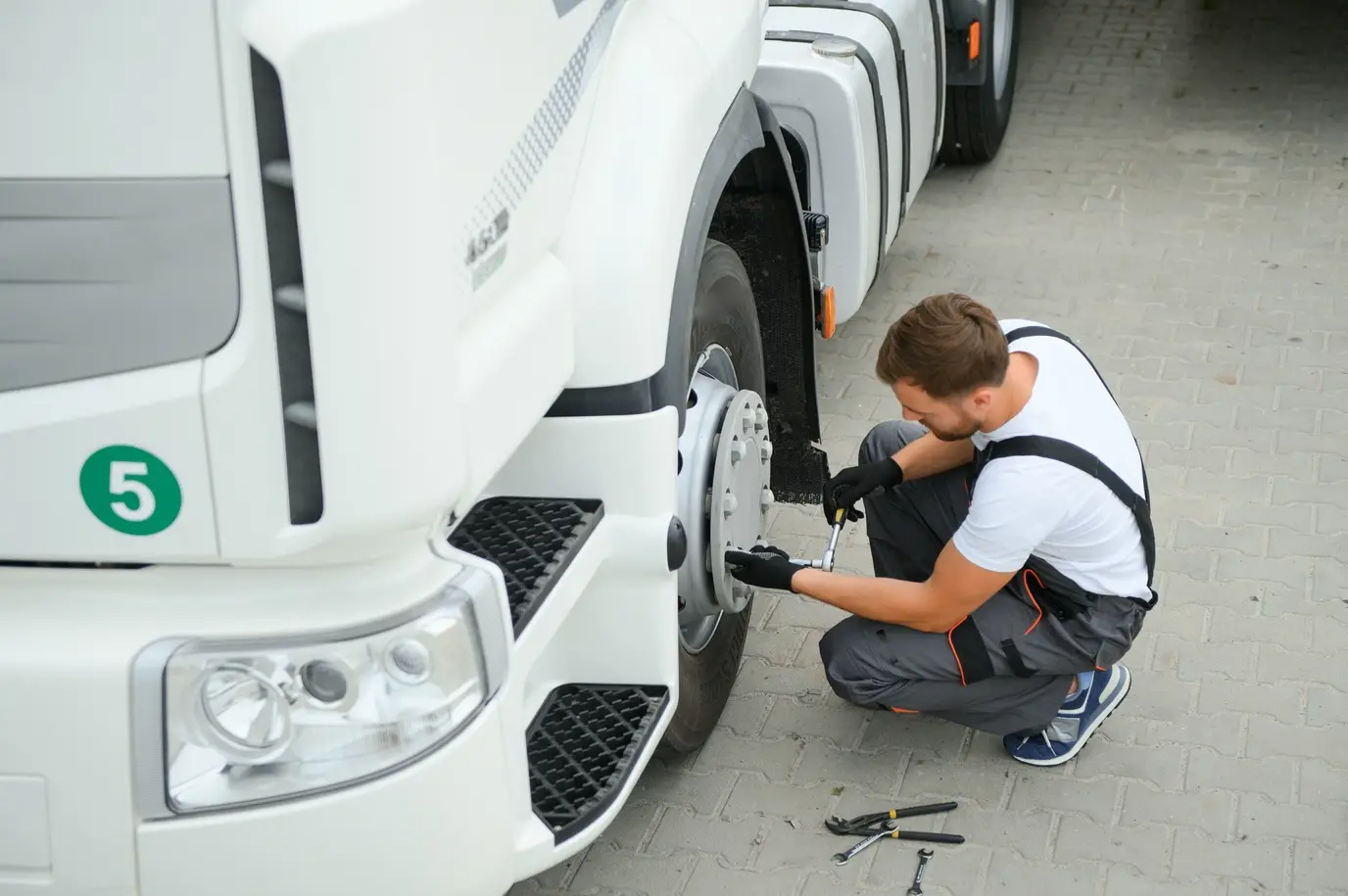
Truck Brake Repair: What’s Different and Why It Matters More Than You Think
A pickup truck is not just a bigger car. It is a fundamentally different vehicle in terms of weight, purpose, load capacity, and the demands those factors place on every mechanical system — brakes included. Drivers who maintain their trucks the same way they would a sedan are often surprised when brake wear comes faster, feels different, or causes problems that seem disproportionate to the mileage. We at Tower Service Station work on trucks regularly, and the brake-related conversations we have with truck owners tend to follow a pattern: the truck’s braking demands were underestimated from the start.
Why Truck Brakes Work Harder From Day One
Braking force required to stop a vehicle is directly proportional to its mass. A half-ton pickup truck can weigh anywhere from 4,500 to over 6,000 pounds at the curb — before passengers, cargo, or a trailer. Compare that to the average passenger sedan at roughly 3,000 pounds, and the physics become immediate.
More mass means more kinetic energy to dissipate on every stop. That energy converts to heat, and heat is what wears brake components over time. A truck doing the same urban commute as a car is putting meaningfully more thermal stress on its brake system at every single light.
This is not a design flaw. Trucks are engineered for it. But it does mean that brake maintenance intervals, inspection frequency, and the consequences of deferred service are all more significant than they are for lighter vehicles.
What Changes When You Add a Load or a Trailer
An unloaded truck already works its brakes harder than a car. Add a payload in the bed or a trailer on the hitch, and the equation changes dramatically. Here is how load affects truck brake behavior:
- Gross vehicle weight increases — even a partially loaded half-ton bed significantly raises the stopping force required at every axle
- Rear brake demand rises sharply — unlike unloaded driving where fronts carry the majority of braking load, a loaded bed shifts weight rearward and brings rear brakes into much heavier use
- Trailer sway risk increases — if rear brakes are worn or mismatched side to side, a loaded trailer amplifies instability dramatically under hard braking
- Brake fade becomes a real risk — sustained downhill driving while towing creates heat buildup that can temporarily reduce braking effectiveness, a condition passenger car drivers rarely encounter
- Stopping distances lengthen — even with properly functioning brakes, physics means a loaded truck takes considerably longer to stop than an empty one
Drivers who regularly tow or haul should treat brake inspection as a more frequent task than the standard twice-yearly check that applies to typical passenger vehicle use.
Rear Drum Brakes: Still Common on Trucks, Still Misunderstood
Many pickup trucks — including current production models — use drum brakes on the rear axle. This surprises drivers who assume newer vehicles have disc brakes all around, and it leads to maintenance assumptions that do not hold.
Drum brakes work by pressing curved brake shoes outward against the interior surface of a rotating drum. They are durable, cost-effective, and handle the lower braking demands at the rear of an unloaded truck reasonably well. But they have specific vulnerabilities that disc brake owners are not used to managing.
Drum brakes are more susceptible to moisture and corrosion, particularly in winter climates where road salt is heavy. They can develop glazing on the shoe surface, which reduces friction without producing the obvious metallic sounds that disc brake wear generates.
They also require periodic adjustment as the shoes wear, something disc brakes manage automatically through the caliper. Neglecting that adjustment leads to a progressively longer pedal travel before braking engages.
The Brake Components That Take the Biggest Hit on Trucks
Understanding which parts wear fastest helps truck owners know where to focus attention:
- Front brake pads and rotors — still take the larger share of braking load on an empty truck; fronts typically wear faster even on full-size pickups
- Rear drum shoes — wear more slowly but are harder to self-assess and easier to overlook between professional inspections
- Rotors on both axles — truck rotors are subjected to more thermal cycling than car rotors; warping is a real and common outcome of sustained heavy use
- Brake hardware and caliper slides — corrosion on caliper slides causes uneven pad wear and dragging, which generates additional heat even when the brakes are not actively applied
- Brake fluid — absorbs moisture over time, which lowers its boiling point; in a vehicle that generates as much brake heat as a loaded truck, degraded fluid is a genuine safety concern
Getting the Right Parts for a Heavy-Duty Application
Not all brake pads and rotors are rated for the same load ranges. A brake component designed for a compact car and fitted to a three-quarter ton truck will not perform or last the way the vehicle demands.
OE-equivalent parts — those built to the original equipment specifications for the specific vehicle — are the appropriate baseline for truck brake replacement. We install XTremeStop brake pads and rotors, which are engineered and manufactured in Canada to original equipment specifications across a range of vehicle applications.
Saving money on brake components on a vehicle you use to tow, haul, or work is a trade-off that rarely ends well.
Your Truck, Your Responsibility — Service It Accordingly
Trucks are capable, versatile, and built to handle demanding use. That capability comes with a maintenance responsibility that matches the workload. Brake systems on trucks that tow or carry regular loads need more frequent attention, more thorough inspection, and higher-specification replacement parts than a standard vehicle service interval assumes.
We at Tower Service Station perform full digital inspections using Auto-Vitals on every vehicle we service — trucks included — so you receive a complete, documented picture of your brake system’s condition across every component, every axle, and every potential concern. No guesswork, no pressure, no skipped steps.
If your truck is working hard, its brakes are working harder. Call us at 905-574-6166 or reach out through our website to get them properly assessed.

Related Posts


This Post Has 0 Comments