
What should you do when your check engine light comes on? Learn the first steps to take, what to check, and when to seek professional help.
How Often Should You Really Change Your Oil?
The Truth Behind the 3,000-Mile Myth
Few automotive rules have survived longer in popular culture than the 3,000-mile oil change. It got passed down from parent to new driver, repeated at every lube shop, and printed on windshield stickers for decades. But here’s the thing: for most modern vehicles, it simply isn’t accurate anymore. Here at Tower Service Station, we’ve been providing honest, manufacturer-guided automotive care on Hamilton Mountain since 1959, and helping drivers separate fact from fiction is part of what we do. So let’s get into the real story behind oil change intervals and what actually keeps your engine running at its best.
Where Did the 3,000-Mile Rule Even Come From?
The 3,000-mile rule has roots in the era of older vehicle technology and conventional motor oils that degraded relatively quickly under heat and friction. In the 1970s and 1980s, when engines had tighter tolerances and oil formulations were far less sophisticated, this interval made good practical sense.
The rule persisted largely because of the quick-lube industry, which had a financial incentive to promote more frequent services. Oil companies and service chains helped reinforce the 3,000-mile message through aggressive marketing, and it stuck. Even the California government ran public campaigns debunking it as recently as the 2010s, pointing out that it leads to unnecessary oil disposal and wasted consumer dollars.
The truth is, the 3,000-mile standard was never a manufacturer recommendation. It was, and still is, a guideline manufactured by the service industry itself.
What Modern Vehicles Actually Need
Today’s engine technology, combined with advanced synthetic and semi-synthetic motor oils, has changed the equation entirely. Most manufacturers now recommend oil changes at 5,000 to 10,000 miles, with some vehicles going as far as 15,000 miles under the right conditions.
Here are the key factors that determine your actual oil change interval:
- Your owner’s manual: This is always the most reliable source. Manufacturers specify intervals based on extensive engine testing.
- Type of oil used: Full synthetic oils last significantly longer than conventional oils, often 7,500 to 10,000+ miles between changes.
- Driving conditions: Short trips, stop-and-go city driving, towing, or extreme temperatures count as “severe” driving and may require more frequent changes.
- Vehicle age and mileage: Older engines or those with high mileage may benefit from more attentive intervals.
- Oil life monitoring systems: Many modern vehicles include an onboard monitor that calculates oil degradation based on actual driving data rather than a fixed mileage number.
The Real Cost of Over-Changing Your Oil
Unnecessary oil changes aren’t just a waste of your time and money. They also contribute to environmental concerns. Used motor oil is a hazardous substance. When it’s disposed of prematurely, it adds to a growing waste stream that requires careful, regulated handling. The U.S. Environmental Protection Agency estimates that if all American drivers stopped over-changing their oil, it would save more than a billion quarts of oil annually.
Over-servicing also creates a false sense of security. A driver who changes their oil every 3,000 miles might assume their vehicle is in excellent shape, while neglecting the warning signs that build quietly in the engine when old, degraded oil has been allowed to sit too long between changes under genuinely severe driving conditions.
The smarter approach is simply to follow your manufacturer’s recommendation and adjust for your actual driving habits, not an outdated blanket rule.
Signs Your Oil Needs Changing (Regardless of Mileage)
Mileage is a useful guideline, but it’s not the only signal your engine sends. Oil degrades based on heat cycles, contamination, and use patterns, not just distance traveled. Pay attention to these indicators:
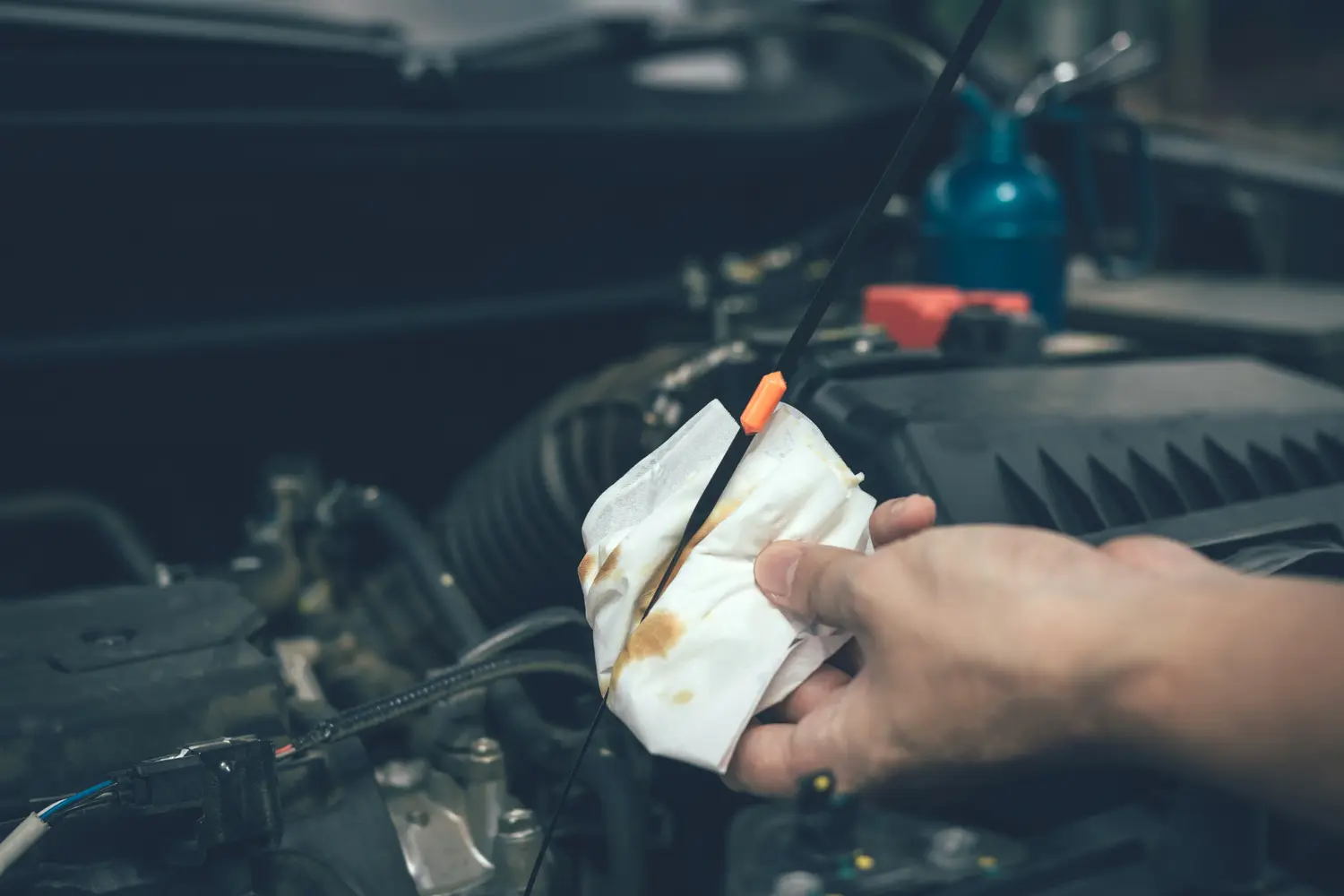
- Dark, gritty oil on the dipstick: Fresh oil is amber and translucent. If it looks black and opaque, it’s carrying contaminants.
- Engine running louder than usual: Oil lubricates metal components. When it breaks down, friction increases and the engine becomes noticeably noisier.
- The oil change or check engine light: Onboard systems detect low oil pressure or degradation before it becomes a bigger problem.
- Burning smell inside the cabin: This can indicate oil leaking onto hot engine components, which is a sign the system needs immediate attention.
- Decreased fuel efficiency: Degraded oil creates more internal resistance, which forces the engine to work harder and burn more fuel.
If you notice any of these signs before you’ve hit your recommended interval, don’t wait. Engine damage compounds quickly once oil starts failing in its job.
Synthetic vs. Conventional: Does It Actually Matter?
Yes, it matters more than most drivers realize. Conventional motor oil is derived directly from crude petroleum and contains natural impurities that cause it to break down faster, especially under high-heat conditions. Synthetic oil is engineered at the molecular level for consistency, thermal stability, and longevity.
Full synthetic oil flows better in cold temperatures, maintains its viscosity under high heat, and resists the sludge buildup that clogs oil passages over time. That sludge accumulation is one of the most significant internal threats to engine health, gradually starving components of lubrication and accelerating wear across the entire system.
Semi-synthetic or synthetic blend oils fall in between, offering improved performance over conventional oil at a lower price point than full synthetic. For most daily drivers who want a reliable middle ground, they’re a solid option.
The right oil type for your vehicle is always specified in your owner’s manual. Using a higher or lower viscosity than recommended won’t extend engine life, it can actually cause premature wear.
Your Engine Doesn’t Run on Myths. Don’t Maintain It on Them Either.
The 3,000-mile rule had its moment. That moment has passed. Modern engines are precision machines designed to work with modern oils, and maintaining them on outdated advice is a disservice to your vehicle and your wallet.
The right interval is the one your vehicle’s manufacturer recommends, adjusted for how and where you actually drive. It sounds simple because it is. The moment you skip a necessary oil change, or delay it past what your driving conditions warrant, the clock starts ticking on accelerated engine wear, overheating risks, and repair costs that dwarf what a timely oil change would have cost.
We’ve been serving Hamilton Mountain drivers for over 60 years, and our approach has always been the same: give you the honest, manufacturer-recommended service your vehicle actually needs, nothing more, nothing less. Our licensed technicians perform a full digital inspection on every vehicle that comes through our doors, so you always leave knowing exactly where your car stands. When it’s time for your next oil change, we’ll make sure it’s the right one for your vehicle, done right, and done efficiently.
Book your appointment with us at 905-574-6166 or visit towerservicestation.com. Your engine deserves facts, not folklore.

Related Posts


This Post Has 0 Comments